The olive oil market is hard to read, and labels conceal more than they reveal. These seven markers help you tell good oil from mediocre in seconds.
1. A recent harvest year
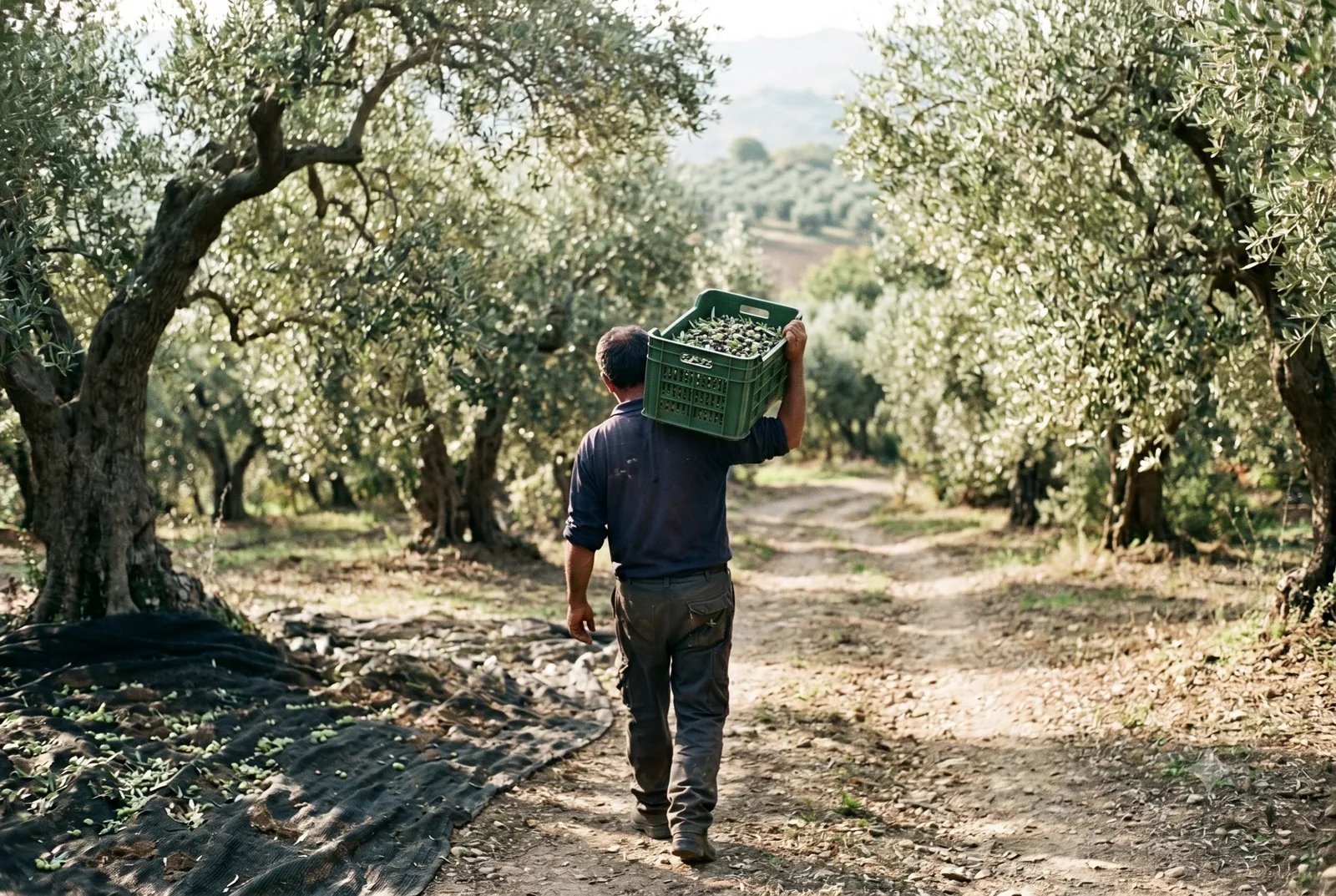
Good oil carries a harvest year. Olive oil is not wine — it does not improve, it loses aroma and polyphenols over time. The fresher, the better.
2. Clear origin
“From oils of various EU countries” is a warning sign. Quality oils name a named region rather than a country blend — in our case the comune of Corigliano-Rossano in Calabria.
3. “Extra virgin” & cold-pressed
Only extra virgin olive oil is the highest grade (acidity below 0.8%, obtained purely mechanically). “Cold-pressed” means without added heat — preserving aroma and natural compounds.
4. Low acidity
The acidity (proportion of free fatty acids) is a freshness marker — the lower, the more carefully processed. Our Nobile sits at 0.21%.
5. Polyphenol values
Reputable producers report polyphenols in mg/kg (COI method). Ordinary oil sits at ~50 mg/kg, good oils well above that.
6. Dark glass
Light destroys aroma and polyphenols. Good oil comes in dark glass or tin — never in clear plastic bottles.
7. The taste
Fresh oil tastes green-fruity, slightly bitter and peppery on the finish. A tingle in the throat is good. Flat, rancid or “just oily” it is not.
Warning signs of adulterated or inferior oil
- No harvest year, vague origin (“EU blend”).
- Very low price (good oil is rarely under ~€20/litre).
- Light or transparent bottle.
- No acidity or polyphenol values, no panel/COI reference.
- Flat, rancid taste, without bitterness or pungency.